
Guide
Inline skate bearings: ABEC, ILQ, SG and Swiss — what they really mean
Inline skates take 608 standard bearings (8 mm bore, 22 mm outer diameter, 7 mm width), two per wheel. ABEC is a dimensional tolerance standard, not a measure of speed. ILQ and SG are skate manufacturers’ own scales, and “Swiss” is the name of a class. What really makes the difference on the road is steel quality, lubricant, sealing and the right spacer length.
The 608 standard and the number of bearings
Almost all inline skates use 608 bearings: 8 mm bore, 22 mm outer diameter, 7 mm width. The same size is used in roller skates and skateboards, so bearings from different brands are interchangeable.
Each wheel holds two bearings separated by a spacer. For skates with eight wheels you need 16 bearings, for three-wheel skates 12. Replace the whole set at once so that all the wheels roll in a similar way.
ABEC, ILQ, SG, Swiss: what the markings mean
None of these markings measures speed. ABEC describes only how precisely the bearing’s dimensions are made, and the others are manufacturers’ own scales or names.
| Marking | Who uses it | What it tells you | What it does not tell you |
|---|---|---|---|
| ABEC 1, 3, 5, 7, 9 | industrial standard | dimensional tolerance; a higher number means tighter tolerances | nothing about the steel, lubricant, sealing or side loads |
| ILQ-5, 7, 9 | Twincam | class of bearings designed for skates | does not convert directly to ABEC |
| SG5, 7, 9 | Rollerblade | class within the manufacturer’s own scale | does not convert directly to ABEC |
| Swiss | various brands | name of a higher class of bearings | does not mean made in Switzerland or a single standard |
The precision described by the ABEC standard matters in machines in which the bearing spins at tens of thousands of revolutions per minute and is loaded along one axis. A skate wheel turns many times more slowly, and with every push and in every turn the bearing takes a side load and a dose of dust. That is why a branded ABEC 5 bearing can roll better and last longer than an anonymous ABEC 9.
Bearings designed for skates also differ in construction: manufacturers change the number and size of the balls, the cage material and the type of seals so that the bearing copes better with side loads and dirt.
Steel or ceramic
For recreational and urban skating, good steel bearings are enough. Hybrid bearings have ceramic balls in steel races: the balls are lighter, harder and do not rust, so the bearing rolls more freely and wears more slowly.
The races are still steel, however, so hybrids do not like water either. They cost considerably more, and the difference is felt mainly over long distances and in racing. For recreational skating, a clean, lubricated steel bearing and a well-matched spacer make more of a difference.
Seals and lubricant
If you skate on dusty paths, choose bearings with rubber seals. They protect against dust and moisture better than metal shields, and for cleaning you can remove them with a needle and put them back.
The lubricant determines how the bearing behaves day to day:
- oil — the bearing spins up easily from the first session, but needs servicing more often,
- grease — puts up slightly more resistance at first, but protects against water and dirt for longer.
The spacer and its length
The spacer between the bearings must be the same length as the distance between the bearing seats in the wheel core. Nominally this is about 10.25 mm, but cores from different manufacturers differ by tenths of a millimetre.
| Symptom | Cause |
|---|---|
| The wheel slows down after the axle is tightened | spacer too short: the axle squeezes the bearings from the sides |
| The wheel has side play | spacer too long: the bearings do not sit in their seats |
| The wheel spins the same with the axle tightened and loosened | correct length |
Before you decide that new bearings are slow, do this test on every wheel. A badly matched spacer can stop the best bearing. In our workshop we measure cores with a micrometer and match the spacer — that is our wheel core measurement and spacer matching service. You will find the parts themselves in the spacers and axles section.
Maintenance: cleaning and lubrication
If you skate regularly, clean and lubricate your bearings every 2–3 months, and straight away after skating in rain or sand. After a wet session, take them out and dry them the same day, because rust can appear within 24 hours.
- Remove the wheels and push the bearings out of the cores.
- Remove the rubber seals by levering them up with a needle from the inner edge.
- Rinse the bearings in bearing cleaner or petroleum spirit, shaking them in a closed jar.
- Dry them completely on kitchen paper.
- Apply one or two drops of oil or a little bearing grease.
- Refit the seals, reassemble the wheels with the spacers and check that they spin freely.
Do not wash bearings with water and do not lubricate them with penetrating sprays such as WD-40: they wash out the lubricant and leave the bearing unprotected. While cleaning, rotate the wheels too — the pattern is in the guide how to choose inline skate wheels.
When to replace your bearings
Replace the set if, after cleaning and lubrication, a bearing still grinds, has a gritty resistance or has noticeable play. Rust on the races cannot be reversed.
If one bearing has seized, check the others from the same skate, because they usually worked in the same conditions. Current sets, including ILQ-9 and Stelior, are in the inline skate bearings section.
Quick answers
Is ABEC 9 faster than ABEC 5?
Not necessarily. ABEC describes dimensional tolerance, and in skates rolling depends mainly on the steel, lubricant, sealing and how clean the bearing is.
Which bearings fit inline skates?
608 bearings: 8 mm bore, 22 mm outer diameter, 7 mm width. There are two per wheel, which means 16 for skates with eight wheels.
What is the difference between ILQ and ABEC?
ABEC is an industrial tolerance standard, ILQ is Twincam’s scale for bearings designed for skates. One does not convert into the other.
How often should I clean skate bearings?
With regular skating, every 2–3 months and after every session in rain or sand. Wet bearings must be dried the same day.
Can I lubricate bearings with WD-40?
No. It is a penetrating spray that washes out the lubricant. Use oil or grease designed for bearings.
Models mentioned
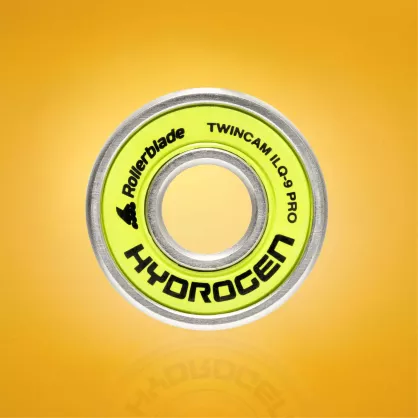
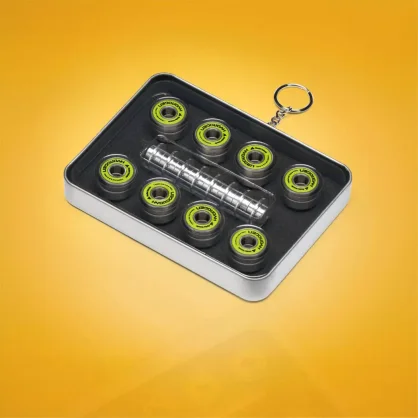
Rollerblade
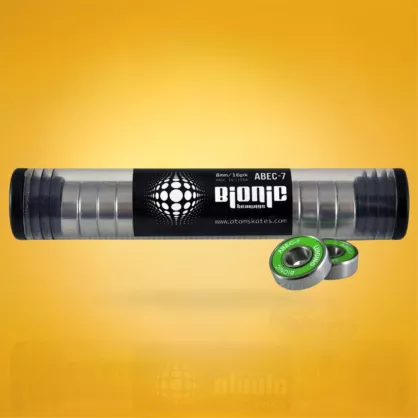
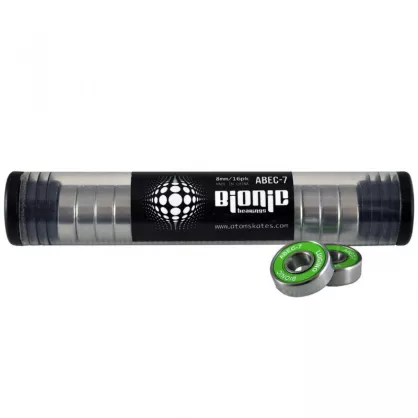
Rollerblade Hydrogen ILQ-9 Pro skate bearings, lime (16 pcs)
16 pcs · ILQ-9 Pro · SUS 420 stainless steel · 8 spacers
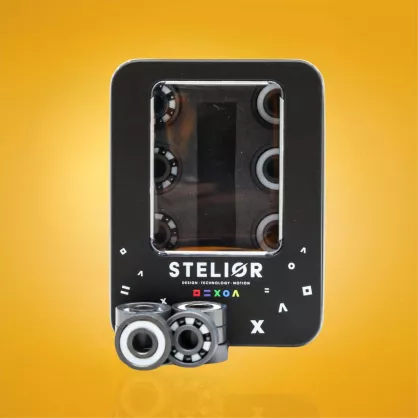

Stelior
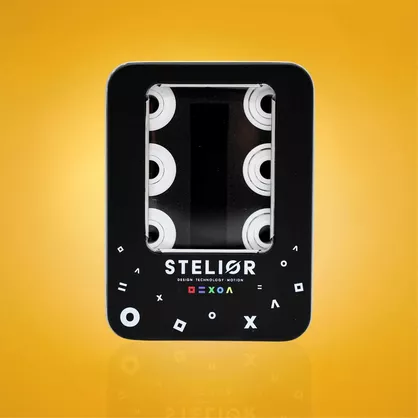
Stelior Pro Black Ceramic racing bearings (16 pcs)
16 pcs · ceramic bearings · racing · Stelior
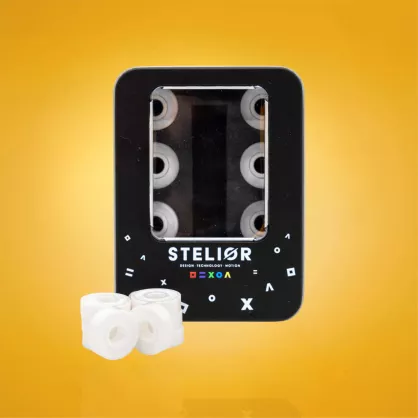
Stelior
Stelior Pro White Ceramic racing bearings (16 pcs)
16 pcs · full ceramic ZrO2 · 608 · 7 balls · PTFE cage
Read on
- GuideHow to choose inline skate wheels: diameter, hardness and rotationDiameter depends on the frame, hardness on the surface and your weight. Uses of 72–125 mm wheels, a rotation pattern and signs it is time for new wheels.
- GuideHow to choose ice skates: hockey, figure or recreationalHockey, figure or recreational: a comparison table, sizing rules, the first sharpening and a hollow depth matched to your weight and skating style.
- GuideHow to choose skating protective gear and a helmetPads are sized by knee, elbow and hand circumference, a helmet by head circumference. What to buy first, a fit test and sizes for kids.