
Guide
How to choose ice skates: hockey, figure or recreational
Choose the type of ice skates for how you want to skate: hockey skates are agile and fast, figure skates more stable and designed for curves and spins, recreational skates the most comfortable for occasional public skating. Choose the size by foot length — it comes out smaller than your shoe size. New skates need to be sharpened before your first session.
Hockey, figure, recreational
The three types of ice skates differ in blade and boot, and therefore in how they skate. Choose the one that suits what you want to do on the ice a year from now, not just in the first week.
| Feature | Hockey | Figure | Recreational |
|---|---|---|---|
| Blade | short, rounded at both ends | longer, with toe picks at the front | usually hockey-style |
| Boot | low, stiff | higher cuff, heel | soft, insulated, often with a buckle |
| Strength | turns, acceleration, hockey stops | curves, skating backwards, spins | comfort and warmth |
| Weakness | less stable front to back | toe picks can catch on the ice | less precise control |
| Who for | hockey, dynamic skating | learning figure skating, relaxed skating | occasional public skating |
Which type to start with
Any of the three types is fine to start with, as long as the size is right and the blades are sharpened. The difference is in what gets in the way in the first few hours.
On hockey skates it is easier to tip backwards, because the blade is short and rounded. On figure skates the longer blade gives support, but beginners can catch the toe picks on the ice. Recreational models are the most comfortable, but a soft boot gives less control of the skate once you start skating faster.
If you know you want to play hockey or learn figure skating, buy the right type straight away. Switching means getting used to a different blade all over again.
Size: smaller than your shoe
Ice skates are chosen by foot length, and their size comes out smaller than your shoe size. In hockey skates it is usually 1–1.5 sizes smaller. That is why we give the foot length in centimetres for each model — compare your measurement with that.
Measure your foot standing up, with your heel against a wall, to the tip of your longest toe. You can recognise a well-fitting skate by three things:
- when you stand straight, your toes lightly touch the toe cap,
- when you bend your knees, your heel moves back and your toes have room,
- your heel does not lift when you shift your weight onto your toes.
Do not leave room for a thick sock. Thin socks are worn with ice skates, and extra room means your foot slides, you get blisters and you have no control over the edges. If you have a wide foot, look for wider models rather than a longer size.
Boot stiffness
Choose boot stiffness to match your skill and weight, not your ambitions. A stiff boot transfers power better and supports the ankle during dynamic skating, but it makes it harder for a beginner to bend the leg and needs many hours to mould to the foot.
For recreation and learning, choose models from the lower or middle end of a range. Stiff training and match skates make sense if you play or train regularly, and in figure skating when learning jumps — in that case, ask your coach what level you need.
The first sharpening
New ice skates need to be sharpened before you first go on the ice. A factory blade is flat: it has no hollow to create two edges, so the skate slides sideways and does not let you push off.
We do skate sharpening on ProSharp machines, from PLN 29.99 per pair, in both shops and by post. You can add the service to your order together with the skates. For recreational skating, sharpening is repeated on average every 10 hours on the ice; the sign is the edges slipping on curves and when stopping.
Hollow depth
Hollow depth determines how strongly the edges bite into the ice. It is given in inches as the radius of hollow: a smaller number means a deeper hollow, more grip and less glide.
| Hollow | Behaviour | Who for |
|---|---|---|
| 3/8–1/2 inch | deeper: strong edge grip, less glide | lighter skaters, beginners |
| 1/2–5/8 inch | the most popular compromise | most recreational skaters |
| 5/8–3/4 inch | shallower: more glide, less grip | heavier skaters, speed-focused skating |
If you have no preference, leave the choice to the technician and give your weight in the order notes. For players there are two extra options: a Z channel, which is a flat channel at the bottom of the hollow that improves glide (+PLN 40), and Zuperior, Quad or Ellipse blade profiling, which changes the shape of the blade along its length (+PLN 60).
Caring for the blades
After each session, wipe the blades dry and store your skates in fabric blade covers. Only put hard guards on for the walk from the changing room to the ice: they hold moisture and the blade rusts in them.
Do not walk on concrete in your skates without guards, because a few steps are enough to dull the edge. Guards and laces are in the ice skate accessories section, and adjustable models for the youngest skaters in the kids’ ice skates section.
Quick answers
Should ice skates be smaller than shoes?
Yes. Ice skate sizes come out smaller than shoe sizes, in hockey skates usually by 1–1.5 sizes. The surest way is to measure your foot and compare it with the length given for each size.
Which ice skates for an adult beginner?
Any type will do if the size is right. Figure skates are more stable front to back, hockey skates more agile, recreational skates the most comfortable.
Do new ice skates need sharpening?
Yes. A factory blade has no hollow, so the edges do not grip the ice. The first sharpening is done before the first session.
Which hollow should I choose when sharpening ice skates?
1/2 and 5/8 inch are the most popular. Lighter skaters and beginners usually prefer a deeper hollow, heavier and speed-focused skaters a shallower one.
How often should ice skates be sharpened?
For recreational skating, on average every 10 hours on the ice. Sooner if the edges slip on curves or when stopping.
Models mentioned
CCM
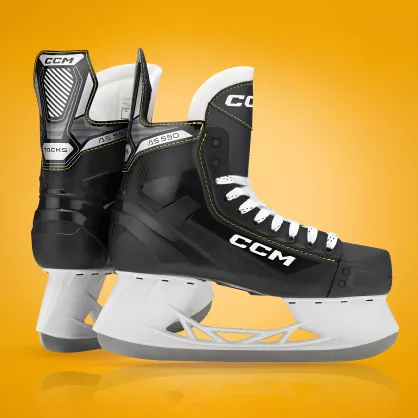
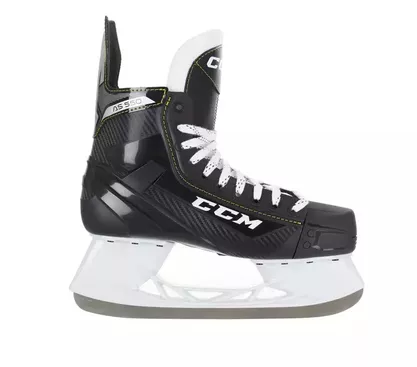
CCM Tacks AS-550 Senior hockey skates
injected boot · core hardness 115 · Speedblade blade · Regular fit
CCM
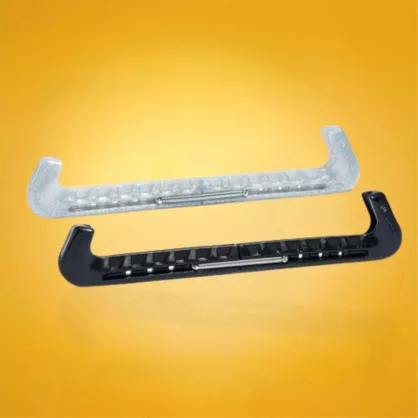
CCM MIX skate blade guards with spring
pair · spring length adjustment · colour to choose
Bladerunner
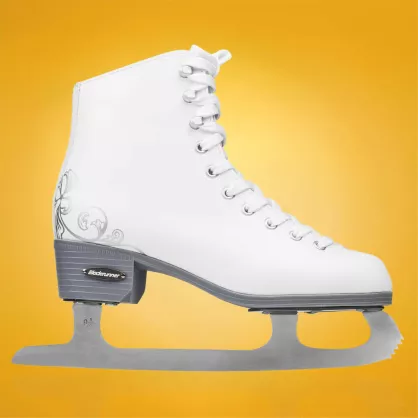
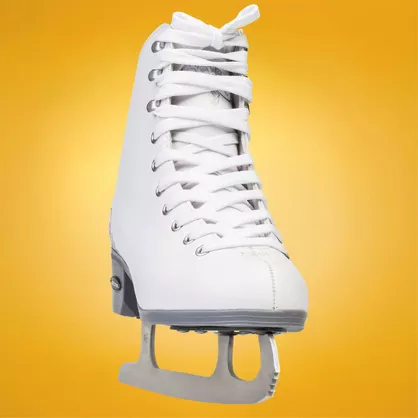
Bladerunner Allure W figure skates
synthetic leather upper · velvet lining · stainless steel blade
Rollerblade
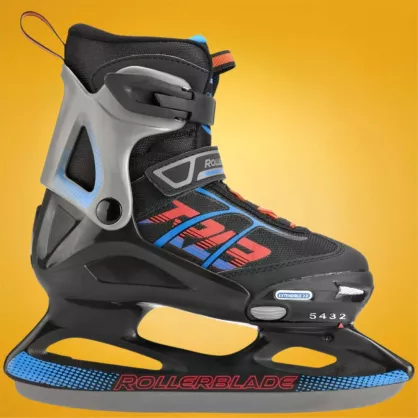
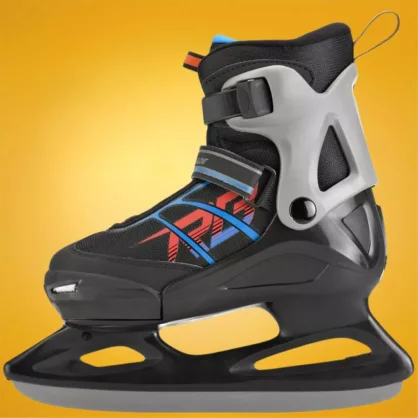
Rollerblade Comet Ice kids' adjustable ice skates, black/blue
adjustable · stainless steel hockey-profile blade · buckle, 45° velcro strap, Speed Lace
Read on
- GuideHow to choose inline skate wheels: diameter, hardness and rotationDiameter depends on the frame, hardness on the surface and your weight. Uses of 72–125 mm wheels, a rotation pattern and signs it is time for new wheels.
- GuideHow to choose skating protective gear and a helmetPads are sized by knee, elbow and hand circumference, a helmet by head circumference. What to buy first, a fit test and sizes for kids.
- GuideHow to choose inline skate size: measuring your foot in millimetresMeasure your foot in millimetres and choose an insole 0–5 mm longer. Step-by-step measuring guide, dual sizes and adjustable kids’ skates.