
Guide
How to choose inline skate wheels: diameter, hardness and rotation
Choose inline skate wheels in three steps: check the largest diameter your frame will take, choose the hardness for the surface and your weight (85A is a versatile choice for tarmac), and finally the profile — rounded for the city, narrower for fast skating. For urban skating, 80 mm wheels with a hardness of 85A are the most common choice.
Diameter: what the frame will take
Wheel diameter is limited by the frame, so start there. A wheel larger than the manufacturer intended will not fit between the axles or will rub against the boot. You will find the maximum diameter in the skate’s specifications, and it is often printed on the frame as well.
| Diameter | Use | Ride character |
|---|---|---|
| 72–76 mm | kids’ skates, slalom, small sizes | very manoeuvrable, slower |
| 80 mm | city, freeskate, learning | a balance of manoeuvrability and speed |
| 84–90 mm | fitness, longer routes | hold speed better |
| 100–110 mm | training, three-wheel skates | fast, tall, less manoeuvrable |
| 125 mm | long-distance speed skating | highest speed, longest braking distance |
A larger wheel rolls more smoothly over cracks and goes further on a single push. At the same time, it raises the centre of gravity and accelerates more slowly. If your frame only takes 80 mm and you want to skate on bigger wheels, you need a different frame, not different wheels.
Hardness on the A scale
A hardness of 85A works on most surfaces, so start with that. The number before the letter A describes the hardness of the polyurethane: the higher it is, the harder the wheel.
| Hardness | Behaviour | Who it is for |
|---|---|---|
| 80A–83A | good grip and vibration damping, faster wear | lighter skaters, rough or wet tarmac |
| 84A–85A | a compromise between grip and durability | urban and recreational skating |
| 86A–90A | slower wear, slides more easily, less comfort | heavier skaters, smooth surfaces, technical skating |
Weight matters a lot here. The same 83A wheel behaves well under a person weighing 60 kg, but under someone 40 kg heavier it deforms and wears noticeably faster.
On a wet surface, grip drops at every hardness. Softer wheels lose it later, but the braking distance gets longer anyway, so after rain skate more slowly, whatever set of wheels you have.
Profile and core
A wheel’s profile is the shape of its cross-section. A rounded, full profile has a larger contact area, gives stability when leaning and copes well with urban skating. A narrower, more pointed profile reduces rolling resistance and suits distance skating.
The core is the plastic or aluminium part in the middle of the wheel that holds the bearings. A stiff core transfers the power of your push better. Cores from different manufacturers differ slightly in the distance between the bearing seats, so after changing wheels you sometimes need a different length of spacer.
Wheel setup is a separate topic. For urban and recreational skating, four wheels of the same diameter are used. In slalom, a setup with smaller wheels in the outer positions is used, for example 76–80–80–76 mm: the skate then turns more easily but is less stable in a straight line.
Wheel rotation
Rotate your wheels every 20–30 hours of skating, because they wear unevenly: mainly on the inside edge, with the outer wheels wearing faster than the middle ones. Without rotation, a wheel becomes lopsided and the skate starts to pull inwards.
Pattern for four-wheel skates:
- Swap the first wheel with the third.
- Swap the second with the fourth.
- Swap the wheels between the left and right skate, so that the worn edge ends up on the outside.
On three-wheel skates, move the wheels along one position and also swap sides. If you always T-stop with the same foot, the wheels on that skate will be more worn — mix them with the other skate when you rotate.
When to replace your wheels
Replace the set when you notice one of these signs:
- a wheel is clearly lopsided despite regular rotation,
- there is little polyurethane left above the core,
- the polyurethane is cracking or coming away from the core,
- the wheels differ in diameter enough that the skate sits unevenly.
Do not mix new and heavily worn wheels on one skate. The difference in diameter changes how the skate sits and reduces stability.
How many to buy and what about bearings
For four-wheel skates you need eight wheels, for three-wheel skates six. You can move the bearings over from your old wheels if they spin quietly and without resistance — 608 standard bearings fit any core. How to assess and clean them is explained in the guide inline skate bearings: ABEC, ILQ, Swiss.
After fitting new wheels, tighten the axles and spin each wheel. If it slows down noticeably after tightening, the cause is usually a spacer of the wrong length, not the bearings. Light-up wheels have a generator in the core and their own spacer with a magnet. They roll with slightly more resistance, so people choose them for visibility after dark, not for speed.
You will find our current range in the inline skate wheels section.
Quick answers
Which skate wheels for tarmac?
For urban and recreational skating, 80 mm with a hardness of 85A. On very rough tarmac, lighter skaters can choose 83A–84A.
Are bigger wheels faster?
Yes, they hold speed longer and roll better over uneven surfaces. However, they are less manoeuvrable, taller and need a longer braking distance.
How often should I rotate my skate wheels?
Every 20–30 hours of skating. Swap the first with the third, the second with the fourth, and swap the wheels between the left and right skate.
Can I fit bigger wheels than the factory ones?
Only up to the diameter the frame will take. If the frame is designed for 80 mm, bigger wheels require a new frame.
Are 82A wheels good for the city?
They give good grip and comfort but wear faster, especially under a heavier skater. For everyday skating, 85A is a more durable choice.
Models mentioned
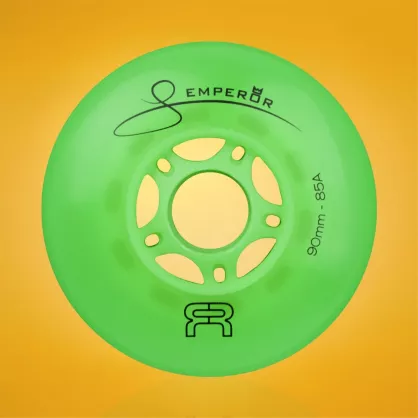
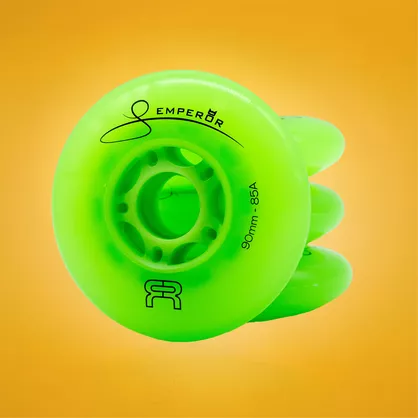
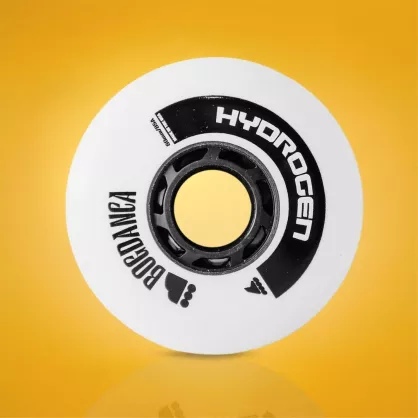
Rollerblade4 sizes
Rollerblade Hydrogen Bogdanca wheels 80 mm 85A (8 pcs)
80 mm · 85A · 8 pcs
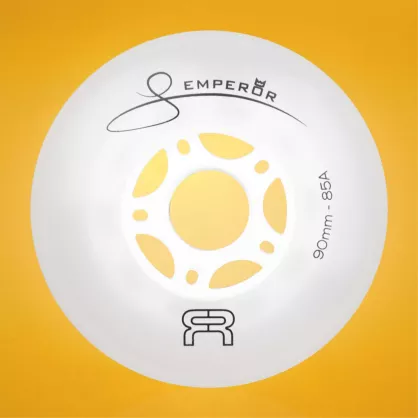
FR Skates2 colours
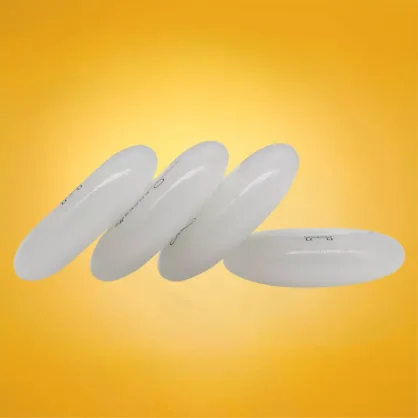
FR Downtown Emperor wheels 90 mm / 85A, white (4 pcs)
90 mm · 85A · 4 pcs · elliptical profile
FR Skates
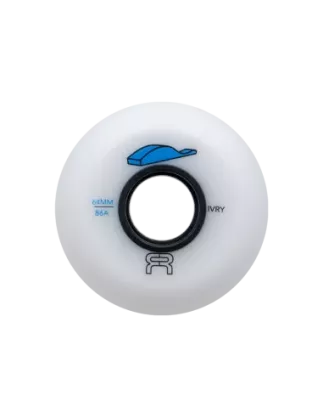
Kółka do rolek FR Skates Ivry 60 mm / 86A biało-czarne (4 szt.)
60 mm · 86A · 4 pcs · white/black
Read on
- GuideHow to choose ice skates: hockey, figure or recreationalHockey, figure or recreational: a comparison table, sizing rules, the first sharpening and a hollow depth matched to your weight and skating style.
- GuideHow to choose skating protective gear and a helmetPads are sized by knee, elbow and hand circumference, a helmet by head circumference. What to buy first, a fit test and sizes for kids.
- GuideHow to choose inline skate size: measuring your foot in millimetresMeasure your foot in millimetres and choose an insole 0–5 mm longer. Step-by-step measuring guide, dual sizes and adjustable kids’ skates.