
Universal wheel spacers for inline skates – why are they a bad idea?
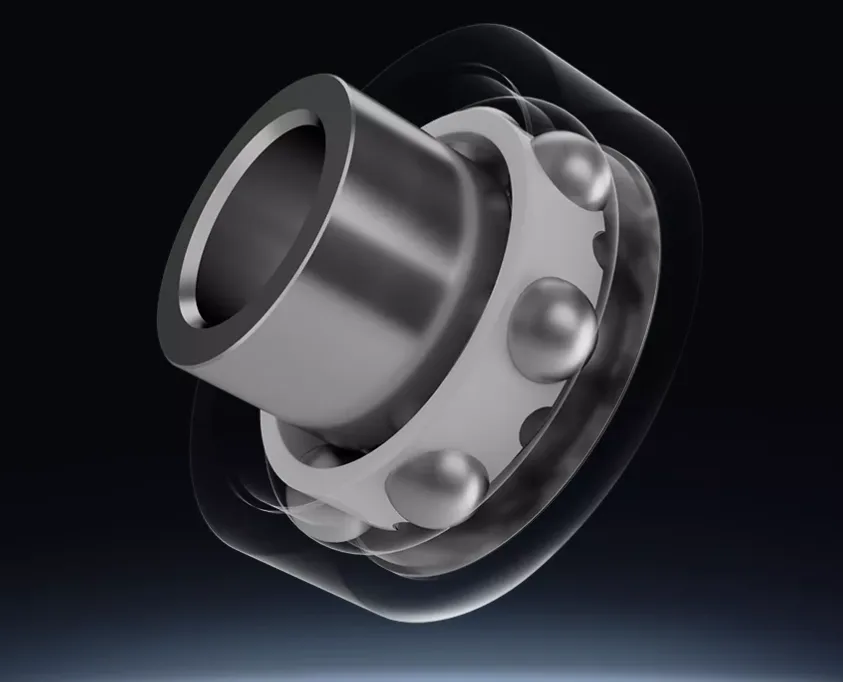
“The modern H-COL-133 spacer design – a revolution, a compromise or a failure?”
A manufacturer’s website presents universal spacers that are supposed to fit any wheel. It sounds like a breakthrough, but in the world of inline skating, in our opinion, an idea like this is asking for trouble. Every wheel needs a precisely matched spacer width; otherwise, instead of a smooth ride, we can expect pinched bearings, play and rapid wear of the equipment. We look at why the “revolution” is not a solution at all, but rather a compromise that may turn out to be a failure.
While searching the internet, we came across the website of a manufacturer that announces it will be adding such spacers to its range. Interestingly, browsing the spspsk site, you can notice that the Rollerblade brand is strongly featured – could they be preparing something together?

source: www.spspsk.com
Universal wheel spacers – why are they a bad idea for inline skates?
What exactly are spacers?
Every skate wheel has the same basic arrangement: bearings + spacer.
- Bearings (most often the 608 standard) are seated on both sides of the wheel hub.
- The spacer goes between the bearings and ensures the correct pressure once the wheel is fastened with the bolt (axle). Its job is simple: to hold the bearings in the right position so that tightening the bolt does not pinch the bearings and cause rolling resistance.
Why is spacer width crucial?
Every wheel manufacturer has a slightly different hub geometry. Even if all the wheels have a diameter of 72 mm, 76 mm or 80 mm, etc., the width of the seat for the spacer and bearings is not always identical. In practice, this means:
- One wheel will need a spacer with a length of e.g. 10.2 mm,
- Another of the same size may need 10.3 mm,
- Yet another 10.4 mm.
This difference of 0.1–0.2 mm is hugely important!
- If the spacer is too short - when the axle is tightened, the bearings are squeezed, the wheel starts to spin less freely and the bearings wear out faster.
- If the spacer is too long - the wheel will have side play, which translates into poorer stability and “wobble” while skating.

The problem with “universal” spacers
The SPSPSK website presents a solution that looks like a universal spacer that supposedly fits various wheels. The thing is, with inline skates this approach simply does not work.

source: https://www.spspsk.com/
Why?
- Every wheel = a different spacer In theory, a single dimension would be enough. In practice, every wheel model has a slightly different hub width. If the spacer is just 0.1 mm too short, the bearings are already choking.
- Lack of precision “One size fits all” solutions ignore the fact that with inline skates what counts is accuracy to tenths of a millimetre. Bearings must run freely, and that requires spacers precisely matched to the specific wheel.
- Real effects on skating: faster bearing wear; less smooth rolling; worse stability; unpleasant play in the wheel.
How should it be done?
The professional solution is matching spacers to each wheel. The best brands make spacers in different lengths (e.g. 10.15 mm, 10.2 mm, 10.25 mm, etc.) so that you can get a perfect fit. As a result:
- the wheel sits stably,
- the bearings are not squeezed,
- and the skater can be sure of the smoothest possible ride.
Summary
Although it sounds good from a marketing point of view, a universal spacer does not exist.
With inline skates, precision counts – which is why it is better to use dedicated spacers for specific wheels than to trust “universal” solutions, which in the long run reduce riding comfort and damage the equipment.
video source: www.spspsk.com
For the purposes of this article, the video was uploaded as unlisted.
The modern “H-COL-133” spacer design – a revolution or a compromise?
Introduction
SPSPSK offers the H-COL-133 product in its catalogue – a solution concerning spacers (collars) in bearings or rolling systems. Although the website itself does not provide a very detailed technical description in English (the description of this particular product is actually empty), the company promotes its products as part of an advanced bearing technology used in scooters, inline skates and roller skates (rolling assemblies).
It is worth taking a closer look, however: does a solution such as H-COL-133 really live up to its ambitious goals, or could it hide a serious weakness?

source: www.spspsk.com
Reconstructed product description
Note: the SPSPSK website does not contain a detailed description of the H-COL-133 product - so the text below is an attempt to reconstruct a typical technical and marketing description, based on the structure of the website and the nature of the products the company offers.
“H-COL-133” product description
H-COL-133 is an innovative spacer (collar) designed to improve the structure of rolling bearings in skate applications. According to the manufacturer’s intentions, the design is meant to:
- Reduce friction and make the bearing run more smoothly.
- Improve the durability of the whole spacer–shaft–wheel assembly.
- Allow easy fitting and removal without the need for additional tools.
- Use standard dimensions that fit a wide range of inline skate, roller skate and scooter models.
The SPSPSK home page stresses that the bearing technology used in their products solves many problems found in traditional designs.
However - as is often the case with “universal” solutions - the key question is: can one type of spacer (such as H-COL-133) really be optimal for many different wheel sizes?
Why might such a solution be inadequate?

source: www.spspsk.com
Although the idea of a universal spacer sounds tempting (easy servicing, standardisation), in practice this approach has several serious limitations:
- Different inner diameters of the wheel / bearing Depending on the wheel manufacturer, the width of the wheels, the type of bearings and the tolerances, the requirements for the spacer’s inner diameter (i.e. the fit between the shaft and the spacer) can differ considerably. A spacer that fits one set perfectly may be too loose or too tight in another.
- Distance between the bearing inner rings / assembly width In many bearing applications we deal with different bearing widths - e.g. the standard 608 bearing (typical in inline skates and scooters) has a specific width, while other specialist bearings may be wider or narrower. A universal spacer may in fact not take these differences into account and lead to axial play or overloading of the bearing walls.
- Manufacturing tolerances and clearance fit vs interference fit In practice, fitting spacers must take into account manufacturing tolerances (microscopic material deviations, thermal expansion, design clearance). If you design one universal solution, it is very easy to lose the optimal balance between clearance, press-in force and durability.
- No optimal adaptation to a specific load / application Different uses (high speeds, high side loads, etc.) require different materials, coatings or tolerances. A spacer designed “for every case” may be a compromise that, for some applications, will be inadequate in terms of strength, stability or wear resistance.

source: www.spspsk.com
Conclusions
Although the H-COL-133 solution and the ideas promoted by SPSPSK (standardisation, ease of fitting, improved bearing structure) may be attractive from a marketing point of view, in practice the universal approach to bearing spacers / collars has serious limitations.
Every wheel and every bearing - especially in inline skating, scooters and roller skates - may require individual selection of diameter, width, tolerance and fit. A solution that tries to “fit everything” may end up reducing durability, causing play or an excessively tight press fit.
author: Filip
See in the shop
Wheels and bearings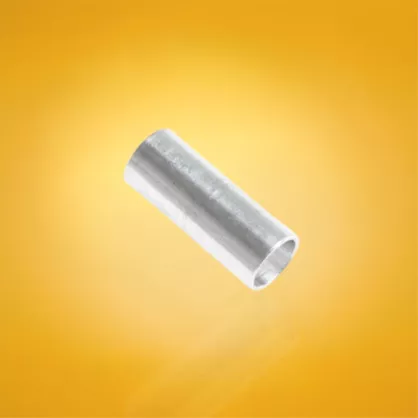
Luminous
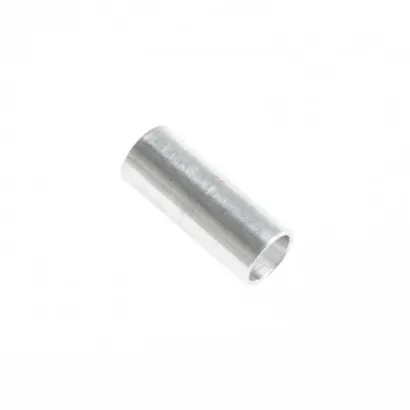
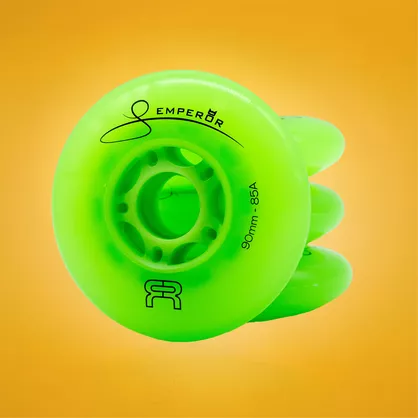
Luminous 8/6 mm reducing spacer for light-up wheels (1 pc)
8 mm → 6 mm · aluminium · 1 pc
Rollerblade4 sizes
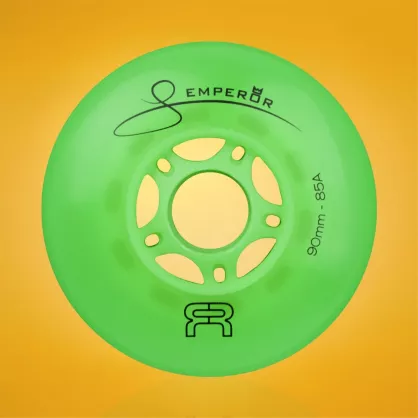
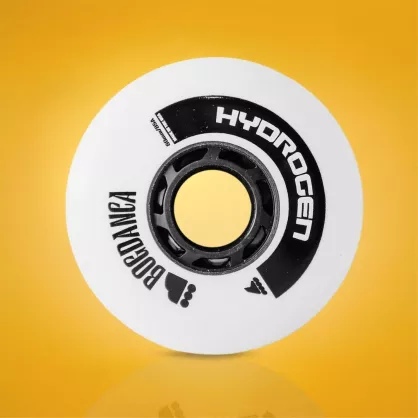
Rollerblade Hydrogen Bogdanca wheels 80 mm 85A (8 pcs)
80 mm · 85A · 8 pcs
Rollerblade
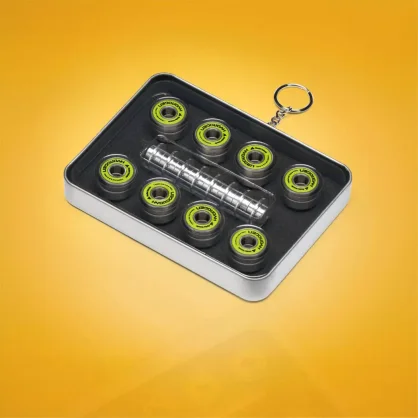
Rollerblade Hydrogen ILQ-9 Pro skate bearings, lime (16 pcs)
16 pcs · ILQ-9 Pro · SUS 420 stainless steel · 8 spacers
Read on
All posts
Blading Games vol. 2
Speed and agility marked out the competitors who gathered on 3 June in the Main Market Square in Katowice to put on a fantastic display of aggressive inline skating at…

Skating backwards on inline skates: a complete guide and step-by-step technique [2026]
Skating backwards opens up a whole new level of freedom, manoeuvrability and control in the city and at the skatepark. In this comprehensive guide, Bogdanca Academy…

Slalom skating workshops with Konrad Kita – Warsaw, Poznań, Wrocław
Join the slalom workshops run by Konrad Kita – one of the best instructors and competitors in Poland. Learn new tricks, improve your skating technique and meet people…